A Strategy for Meeting Ventilator Demand Surge due to Respiratory Related Pandemic or Mass Casualty Events

Currently, Endotracheal (ET) intubation with positive pressure ventilation (PPV) is most frequently used for respiratory support in patients with critical cardiopulmonary support needs during emergent situations. ET intubation and PPV require trained clinicians to place the ET Tubes, set, adjust, and monitor this system's elements. Even with an adequate stockpile of positive pressure ventilators, some patients may not receive treatment due to a shortage of these qualified clinicians.

One study found using simple calculations that the limiting factor during a pandemic-level crisis, such as coronavirus, would be the number of respiratory therapists rather than ventilators.
image

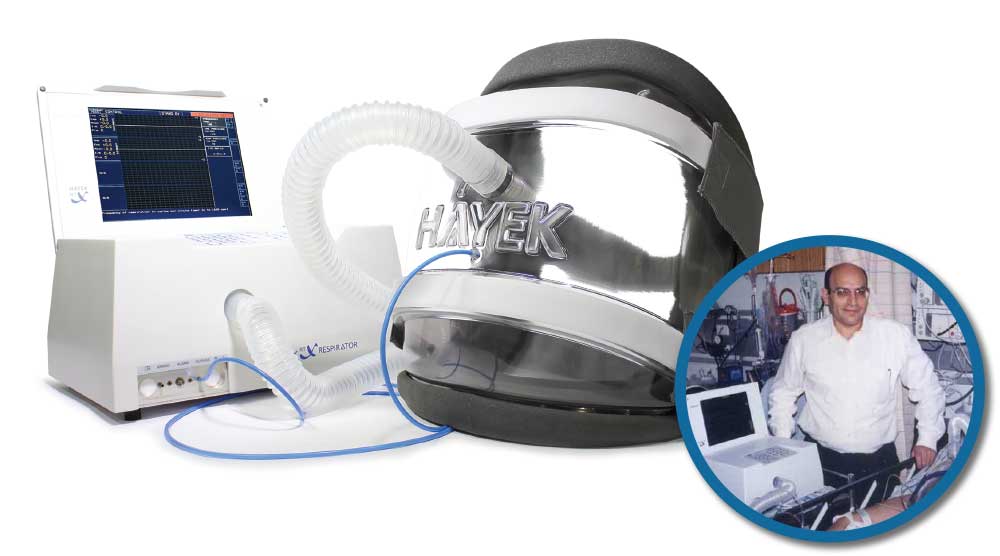
The solution is Biphasic Cuirass Ventilation.
BCV™ does not require skilled medical professionals to apply and monitor, and almost anyone can apply BCV to a patient with minimal training.

Biphasic Cuirass Ventilation, or BCV™, can be applied very easily and with an incredibly short learning time for the end-user. Clinical studies show that teaching the application of BCV can be achieved by virtually anyone in as little as 5 minutes or by watching a short instructional video. Most importantly, the Hayek RTX Biphasic Cuirass Ventilation carries no added risk to the patient's lungs, unlike positive pressure ventilation, which may prove fatal if not closely monitored by a highly trained clinician.

The innovative Hayek RTX leverages advanced technology, designed so doctors, nurses, health professionals, and even non-clinical personnel can quickly apply it without any special training on the basic application. The RTX's efficient application process makes it ideal for personnel providing rapid treatment at the scene of an emergency or during a mass surge, such as during a respiratory-related pandemic, while avoiding the difficulties and complications that will likely arise with PPV.

In the event of a large-scale surge in need for support of breathing, the Hayek RTX™ offers unique advantages for providing that support in patients whose symptoms include:

image

Acute Respiratory Failure

Dyspnea

Hypercarbia

Hypoxemia

Secretion Retention

Clinical Use

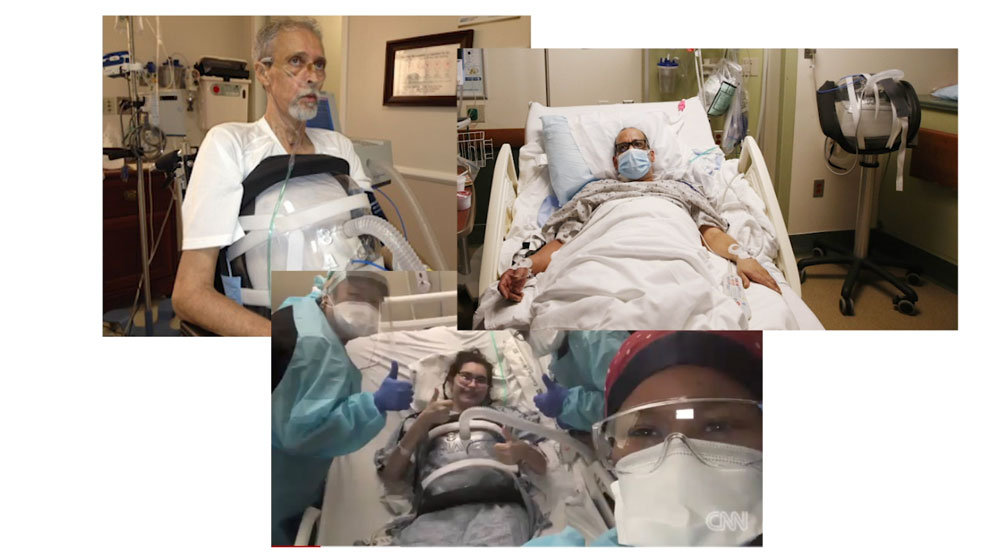
Listen below for testimonial use on BCV™.

Simplicity and Safety

Simplicity and safety of application and the ability to be started and monitored by lay level attendants are among the advantages. Patients triaged to "needing NIV support" can start on BCV at standard pre-entered settings specific to patient size and age. Training groups of care attendants who could each initiate and monitor several patients would expand the capabilities of trained clinicians while allowing much more complete provision of ventilator support to those in need.

With PPV, one respiratory therapist is limited to the number of patients they can start and monitor on that system. With BCV during a mass emergent application, one respiratory therapist or other trained physician extender could oversee patients using BCV through attendants. Directing multiple attendants and using the attendants' reports on patient status to focus on sicker patients requiring immediate attention, allowing for more patients' respiratory support needs to be met in a superior way.

image

The Ideal Ventilator Solution

BCV™ provides ventilation by controlling both phases of the respiratory cycle. It also has a secretion clearance (HFCWO) option, cough option, and has been shown to increase pulmonary muscle strength.

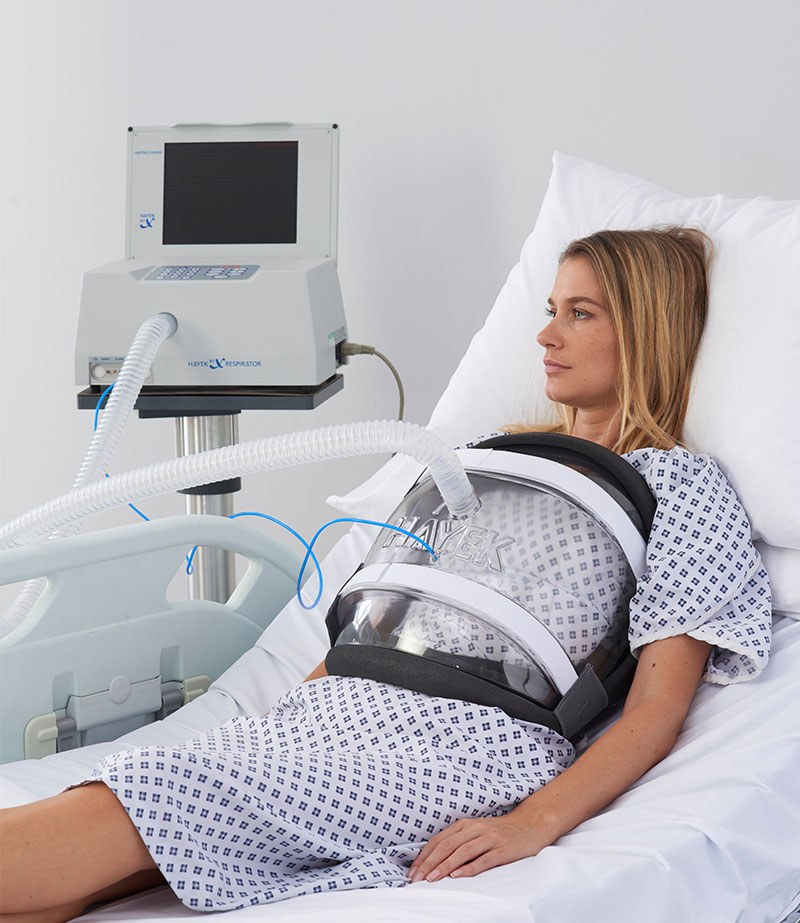
BCV™ works by applying a cuirass shell to your chest, which creates suction and results in negative pressure. This suction draws your diaphragm downward, causing your ribs to expand, inducing a breath in. During the expiratory phase, positive pressure is applied through the cuirass, which causes your diaphragm to move back up, providing a breath out.


What are other benefits of Biphasic Cuirass Ventilation (BCV™)?

Contact us now to book an in-service!


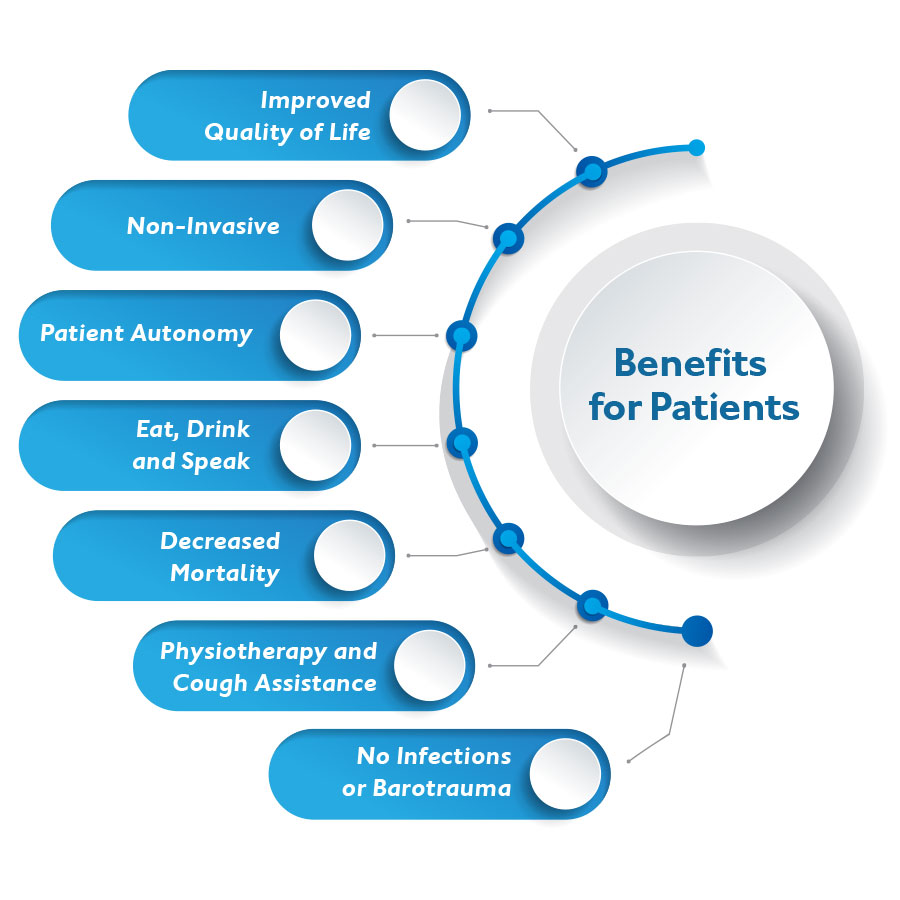
✓ BCV™ offers a Secretion Clearance and Cough Option to effectively break up and remove secretions without needing to switch devices.

✓ BCV™ provides patient autonomy. Unlike other forms of ventilation, BCV™ allows patients the ability to eat, drink and talk while being ventilated, which allows patients to be an active participant in their treatment.

✓ BCV™ is more comfortable. BCV™ uses an external cuirass shell with a soft foam seal to ventilate, which many patients find more comfortable than other forms of ventilation.

✓ BCV™ offers a variety of shell sizes to fit adults, children, infant and even neonates.

✓ BCV™ is available for both hospitals and home care patients.

macbook

Get in Touch